We Choose To Go To The Moon

Moon Landing 40th Anniversary

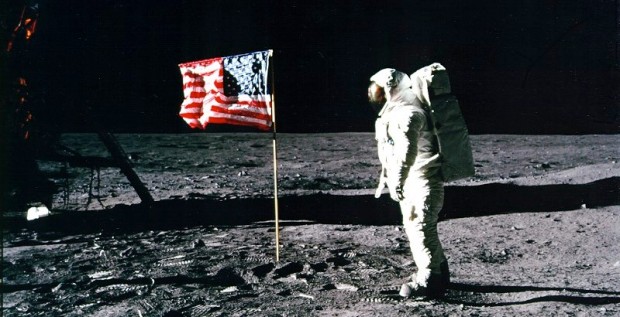
It started during a Joint Session of Congress on May 25, 1961 with John F. Kennedy challenging the United States to put a man on the moon by the end of the decade. 1969, 6 years after JFK was assassinated Apollo 11 landed on the moon and this famous newscast with the late Walter Cronkite who coincidentally passed away on Friday.

For the 40th anniversary NASA restored some of the old video of the landing, now available in H.264 to view. It’s not true HD in today’s terms but still impressive to see. NASA’s Lunar Reconnaissance Orbiter (LRO) also manged to snap a few pictures of the landing sites of the Apollo missions just in time. I believe this is the first time they have ever been identified since the actual landings. 2-3X higher resolution images are under way.

Lastly The John F. Kennedy Library launched “We Choose the Moon” a clever “live” broadcast of the Apollo 11 mission in its entirety with exactly a 40 year delay.

Now 40 years later NASA is embarking on Constellation which even in vehicle design parallels what was done in Apollo. We may be back on the moon by 2020 assuming Constellation, Aries IV or DIRECT succeed.

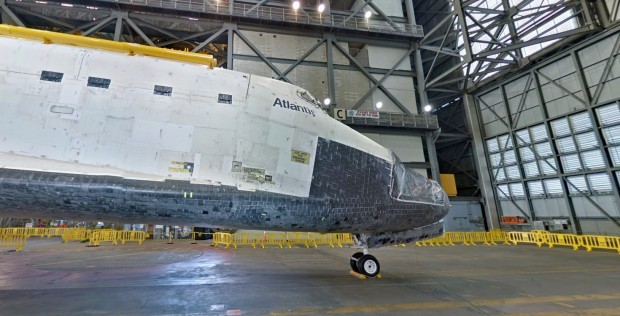
Attach Orbiter Here

Attach Orbiter Here Note: Black Side Down

Attach Orbiter Here
Note: Black Side Down

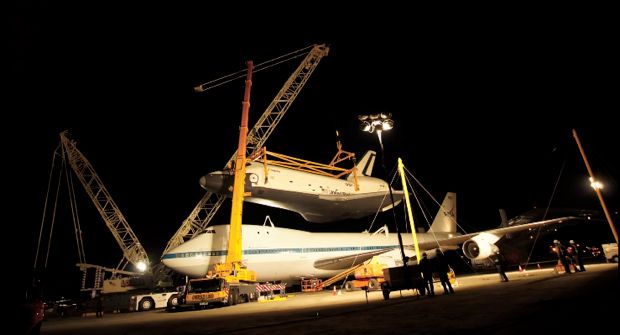
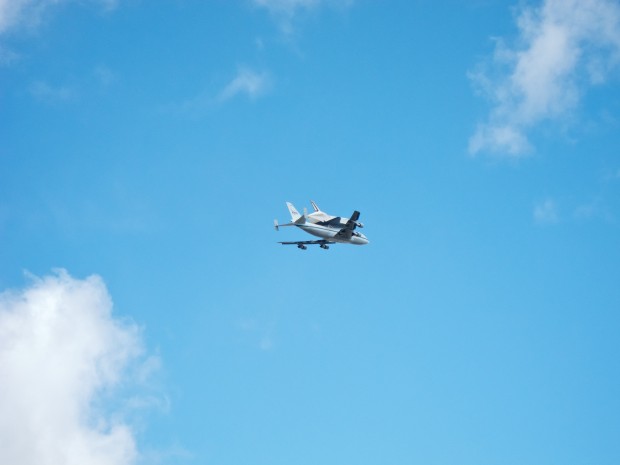
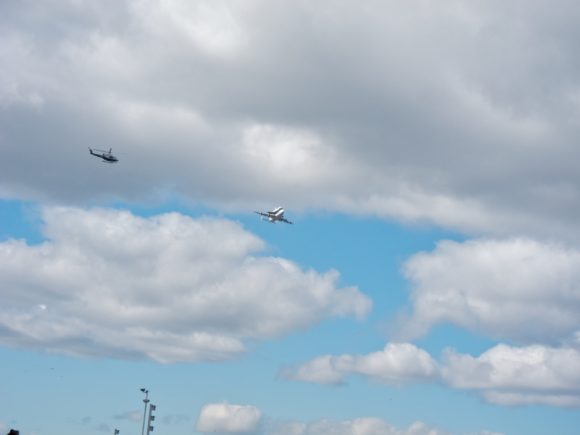
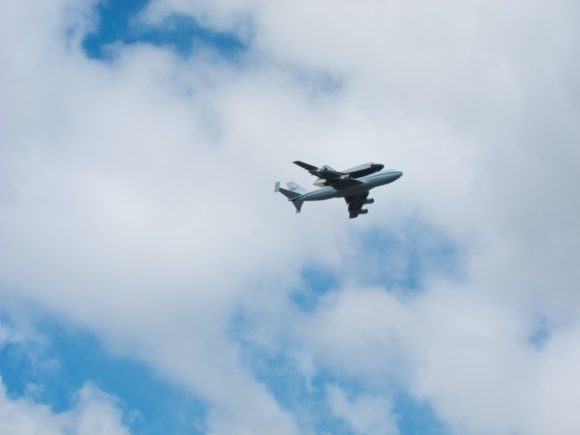
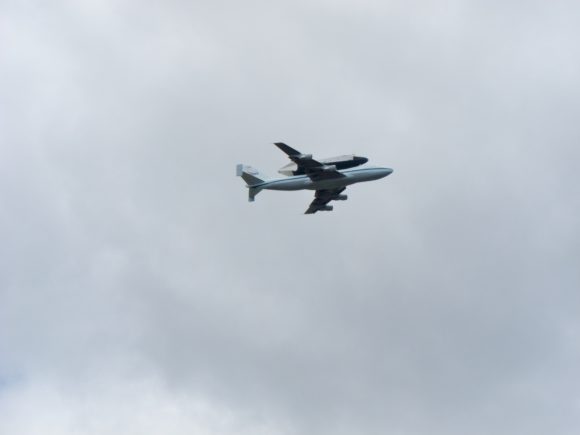
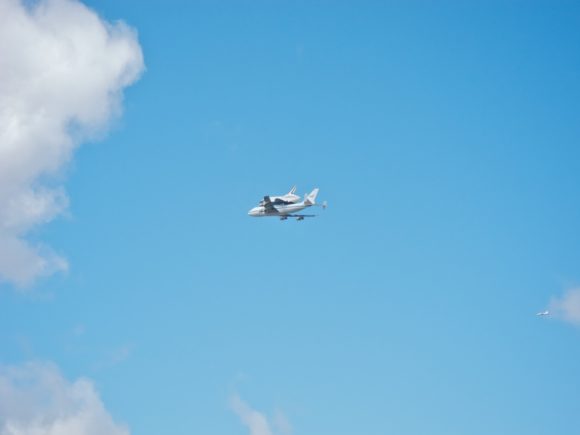
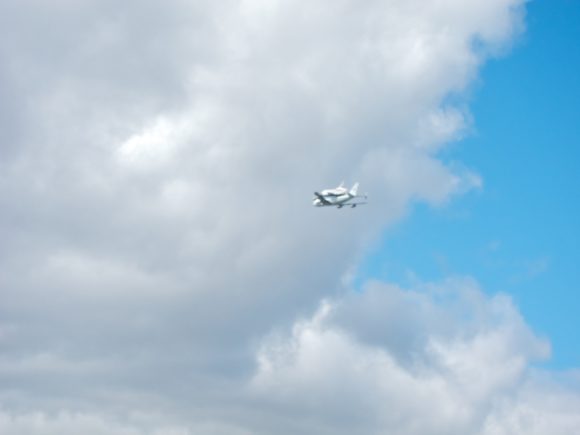
NASA is known as a pretty bureaucratic organization with lots of CYA procedures. But this is just a great little joke hidden up above one of the Boeing 747′s used to ferry the Shuttles when they land somewhere other than Kennedy Space Center.

It’s not just software engineers embedding Easter eggs in their work.

[Via: Wikipedia]

Godspeed Hubble

Hubble Released Atlantis STS 125

This video is the actual release of Hubble as well as the shuttle backing away from the Hubble telescope. It is best watched in HQ and Full Screen. It’s slightly shaky at times and a little long, but it’s got some great shots of Hubble up close. The Big Picture Blog also has a great set of pictures from the mission.

Humans likely will never again approach Hubble. At some point in the future a robotic mission will likely attach to the newly installed Soft Capture Mechanism and safely de-orbit Hubble guiding it into the Pacific away from any humans. That’s not likely until at least 2014, hopefully longer. Hubble has already outlived it’s original life expectancy thanks to previous shuttle visits. With the latest servicing hopefully there are still some great years ahead.

[Via: Bad Astronomy]

Tour The International Space Station

There is a very cool tour of the International Space Station available on YouTube as a set of four videos:

There’s no award to be won for camera work as it’s pretty shaky and quick moving not to mention occasionally hard to follow but it’s a very good tour of something you rarely see more than a snapshot of. It also gives you a chance to appreciate the size of the whole thing. Noteworthy is you can see some of the design differences between modules built by different countries. The Russian built parts look pretty retro compared to the rest of the station. Also interesting is the use of all wall space since there’s no floor or ceiling. It’s packed in there.

NASA Constellation Program

NASA Constellation Ares V/Altair

NASA has posted a very cool video showing the status, and some renderings of the Constellation program. The parallels to the Apollo program are obvious and intentional as they are trying to minimize cost and risk by utilizing what was learned a generation ago. In just 3 years they seem to have done a lot of work, though there’s still years to go until the first flight, and a while longer until we’re looking at a return to the moon. That’s of course assuming that the program isn’t canceled or modified by then.

Altair in a sense is a modernized enlarged version of the lunar lander and Orion is in many ways a larger Apollo Command Module.

The Ares V rocket is a real monster of a rocket. It will be able to lift more than even the Saturn V (famous for being the rocket that shot the Apollo missions into space). Interestingly the Saturn V used the J-2 rocket for the second and third stage (the first used the F-1). The Ares V will use the J-2X rocket which is a modernized version for it’s second stage.

It Must Be Ice

Phoenix has found ice on Mars:

June 19, 2008 — Dice-size crumbs of bright material have vanished from inside a trench where they were photographed by NASA’s Phoenix Mars Lander four days ago, convincing scientists that the material was frozen water that vaporized after digging exposed it.

“It must be ice,” said Phoenix Principal Investigator Peter Smith of the University of Arizona, Tucson. “These little clumps completely disappearing over the course of a few days, that is perfect evidence that it’s ice. There had been some question whether the bright material was salt. Salt can’t do that.”

You can see an image here. Awesome.

This is pretty historic. The US has hopes of putting a man on Mars sometime in the 2030 time frame (well after a return to the moon). Water on Mars will likely have an impact on how that mission is designed, and possibly it’s success.

Mars has ice caps, that’s been known for a long time. Subterranean ice was suspected, and now confirmed.

Night Launch Of Discovery

I noticed this last night, but apparently I wasn’t the only one as Robert Gale over at A Welsh View and Digg also agree that this is one amazing picture of the shuttle launch. The comments on Digg also point out a few other pictures from this and another launch that are similar, as well as pinpoint (by Google Maps) where the pic was taken.

Of course NASA has more, including some in high resolution. Something about a rocket at night makes for some great pictures.

Genesis crashes

NASA is reporting that the Genesis capsule’s parachute didn’t open as planned, resulting in it tumbling to the ground and impacting at what FoxNews is reporting on TV as 100 MPH. Probable damage, but no word on the status of the payload (about the size of a few grains of salt). NASA does have video of the decent (helicopters were present as they were supposed to snag it), showing it tumbling and spinning. Some eerie pictures are being shown now. Amazing how red the dirt it landed in looks. It’s like a Martian impact.

Damn