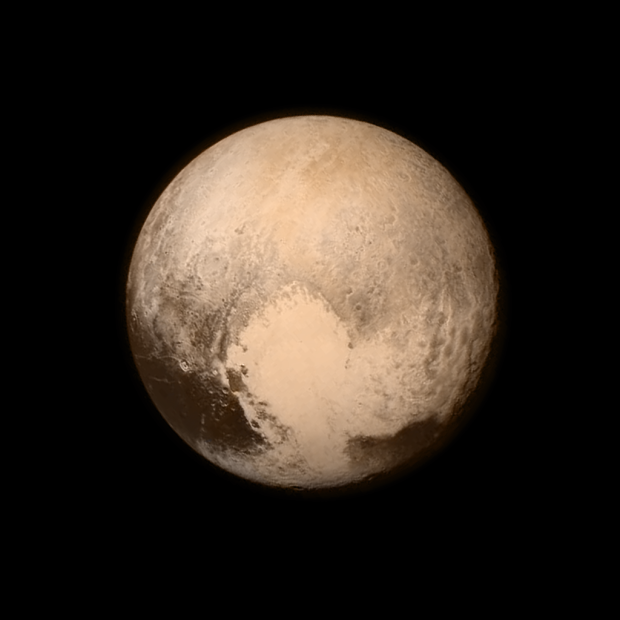
Photo:NASA / JHUAPL / SwRI
Planet or not, roughly 100 years after the first powered flight, we’ve sent a vehicle equipped with a camera to Pluto to take pictures and wirelessly transmit them back. That’s nothing short of amazing.
Photo:NASA / JHUAPL / SwRI
Planet or not, roughly 100 years after the first powered flight, we’ve sent a vehicle equipped with a camera to Pluto to take pictures and wirelessly transmit them back. That’s nothing short of amazing.
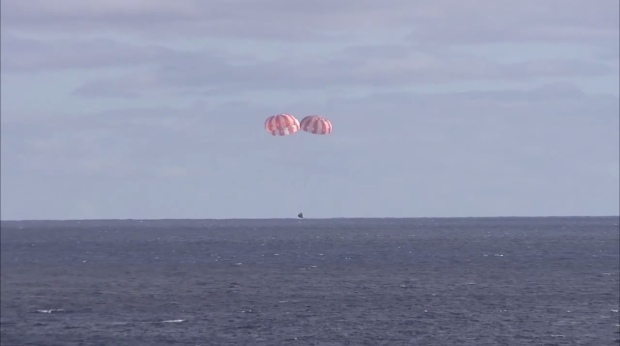
This is a pretty historic day. Orion is the future NASA and manned exploration of space for the US. It’s first flight was a success. It’s just like Mercury, Gemini or Apollo but modern. Who knows. We may see this thing being used to push humans into space to explore new worlds. It’s a glimmer of hope that NASA will still be able to move science forward.

Under Pad 39A and 39B at Kennedy Space Center NASA built a complex of tunnels and bunkers for in case the Saturn V rocket that would bring Apollo astronauts to the moon exploded. Obviously the rooms were never used. They are rarely seen. This is an awesome gallery of photos taken from inside the rubber room.

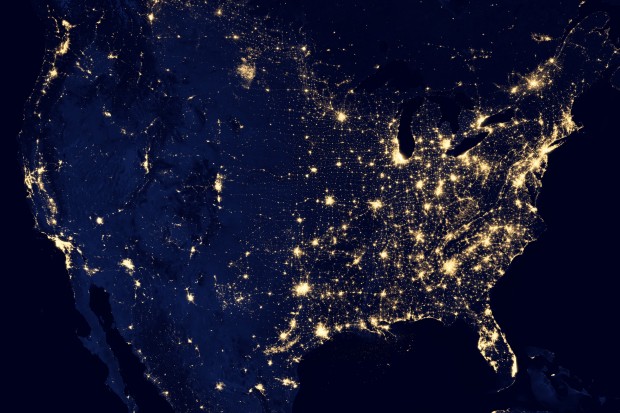
Awesome image released by NASA of the United States at night. There’s a set of images worth checking out including one of the northeast before and after Hurricane Sandy where you can see the impacts the power outages had from space.

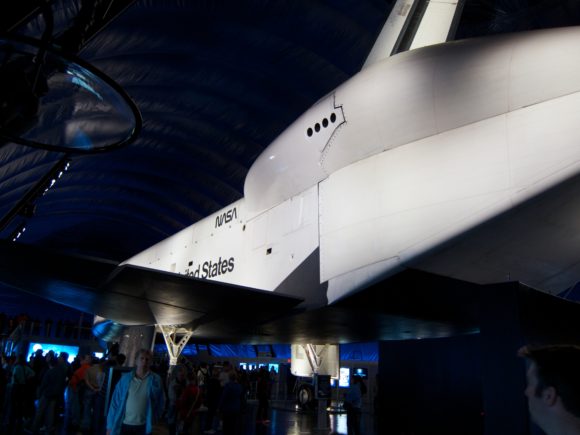
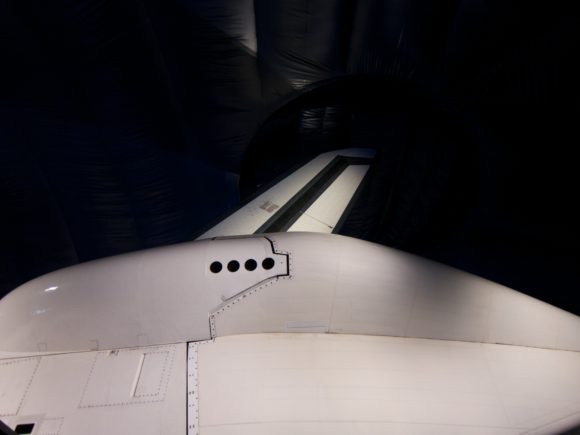
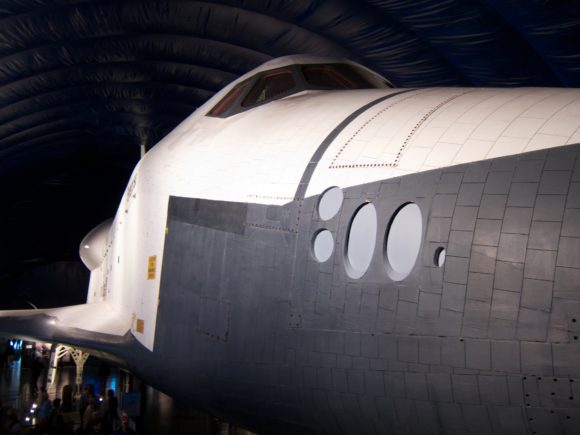
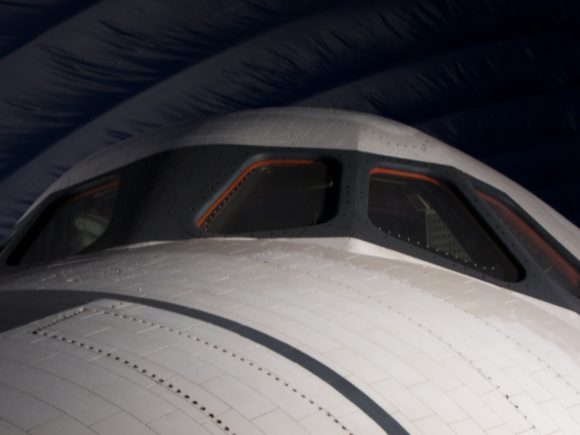
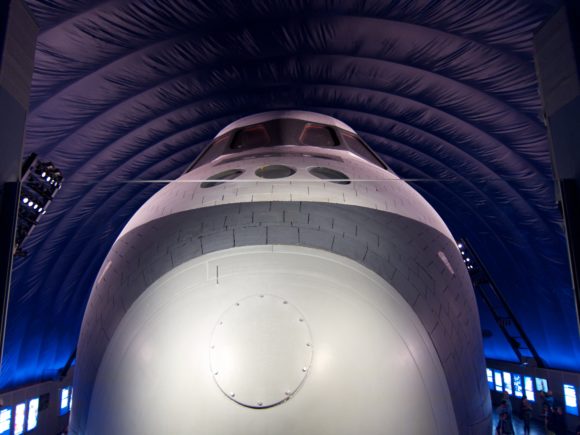
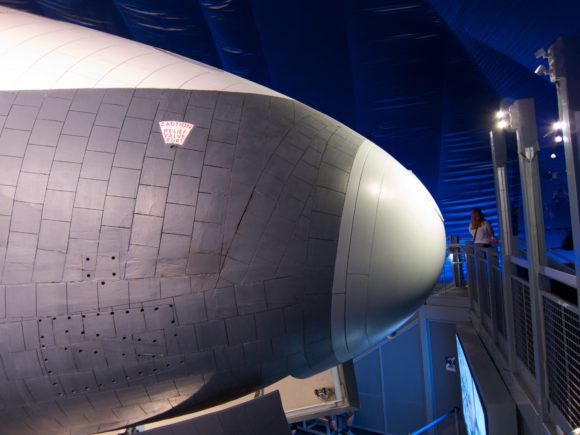
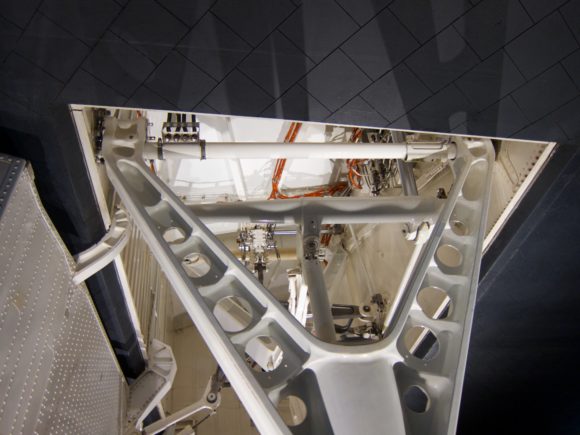
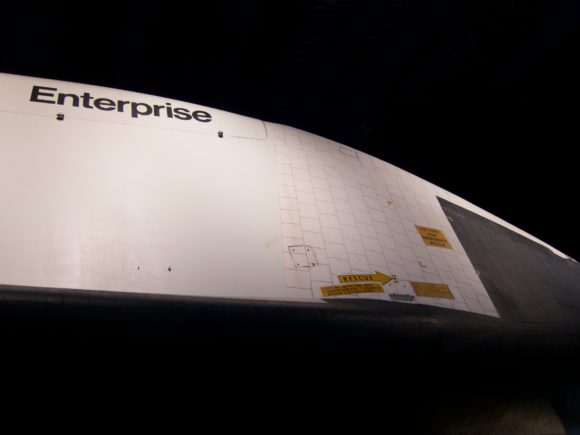
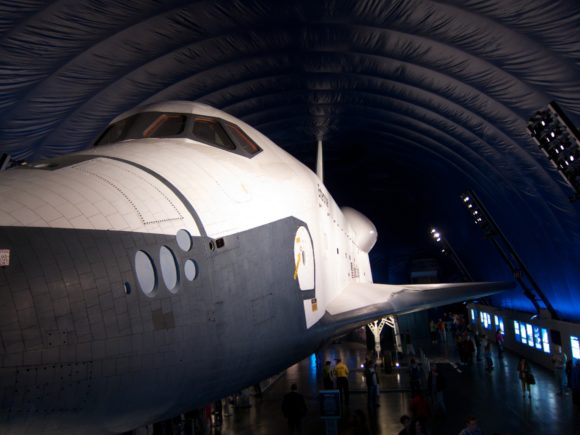
Went to visit the Shuttle Enterprise over the weekend. Only negative to the setup is that the enclosure should have been a little wider so you could see more of the sides. The deck size of the USS Intrepid obviously hinders that. Regardless, they let you get pretty close.

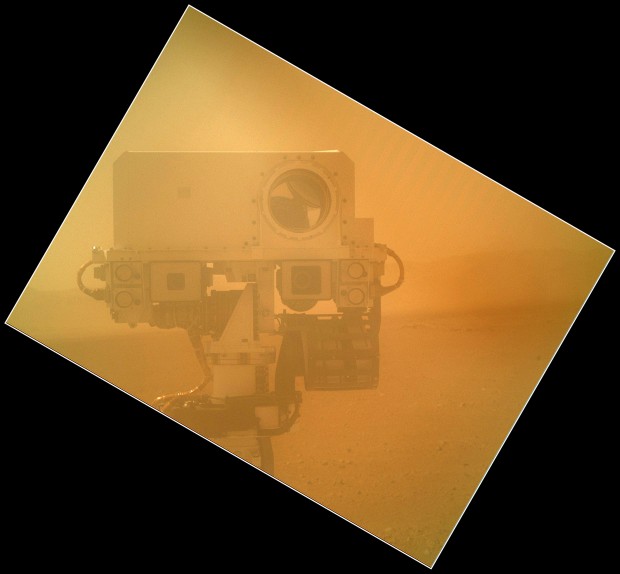
Mars Curiosity Self Shot. No duckface. I wonder if Instagram will add a Mars filter to mimic that effect. Hope so.
I’m really enjoying the photos coming back from Curiosity so far, and it’s just getting started.
How did the Apollo astronauts get life insurance? Well, they didn’t. So they made their own according to Collectors Weekly:
The so-called “insurance” postal covers from Apollo 11 are a safe way of acquiring the crew’s autographs. As Buzz Aldrin has explained, “Since we were unable to obtain adequate life insurance due to the high risk nature of being an astronaut, we signed this group of covers and evenly distributed them to our families for safe keeping while we performed our mission. If an unfortunate event prevented our safe return, the covers would have provided a limited financial means of support to our families.”
This is really a clever approach if you think about it.

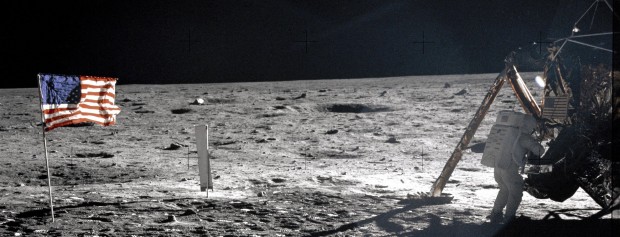
He’s not the first of the twelve to die, but certainly the most notable, and perhaps the most modest. The first person on earth to ever step onto a non earth body simply described himself as:
“I am, and ever will be, a white-socks, pocket-protector, nerdy engineer,”
He walked on the freaking moon, and he simply describes himself as a nerdy engineer, as if he were one of the legions of IBM or HP employees at their peak.
The youngest Apollo astronaut to have walked on the moon is Charles Duke, who is 76 years old in a nation where the life expectancy for a man is 75.6 years. We’ve effectively got no space program together other than a few rovers being shot to Mars. Within a decade, for the first time in my life, it’s possible there won’t be a man alive who has walked on the moon.
Credit must be given to the generation who pulled it off. We may be capable of having a video call across the glove, but we’re far from being able to repeat what they did decades ago visiting the moon.
Thanks Mr. Armstrong for literally shooting for the moon.
Interesting IAmA on reddit with the Mars Curiosity team. Lots of great stuff but being a programmer this caught my eye:
You are right that the processor does feel acient. Our current smarthphones are more powerful. The reasoning for this is three-fold. First of all, the computer was selected about 8 years ago, so we have the latest and greated space certified parts that existed then. Second of all, it was the most rubost and proven space grade processor at that time. Thirdly, in order to make a processor radiation hardened it requires lots of tricks on the silicon that is not conducive to making it fast. Given that, it does not run any GUIs and can just focus on raw programming, and actually gets a lot done. All of the programming is done in C, and our toolchain is very similar to programming on any platform.
-JG (presumably Jonny Grinblat aka “Pre-celebration Guy” – Avionics System Engineer)
I did mention a few days ago specifically about the CPU and how it’s really similar to the Power Mac G3’s of the late 90’s.

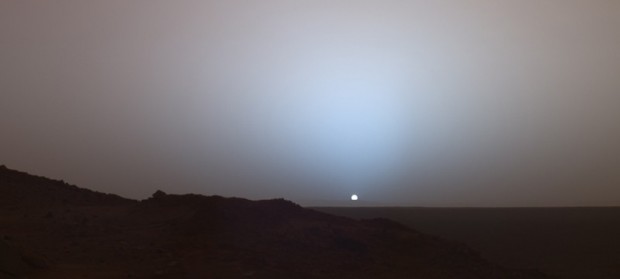
I keep seeing this picture going around the past few days being described as a sunrise on Mars as seen by Curiosity. It’s not. This photo was taken in 2005 by Spirit and it’s of a sunset on Mars. That’s coming strait from NASA. It’s a beautiful picture, but that’s what it really is. Also, it reminds me of Tatooine.