
Reading about this theft of iPads from a cargo hanger at JFK. Just like everyone else my mind went immediately to the iconic movie Goodfellas.
Who knew this sort of thing would still be an issue in 2012 at JFK?

Reading about this theft of iPads from a cargo hanger at JFK. Just like everyone else my mind went immediately to the iconic movie Goodfellas.
Who knew this sort of thing would still be an issue in 2012 at JFK?
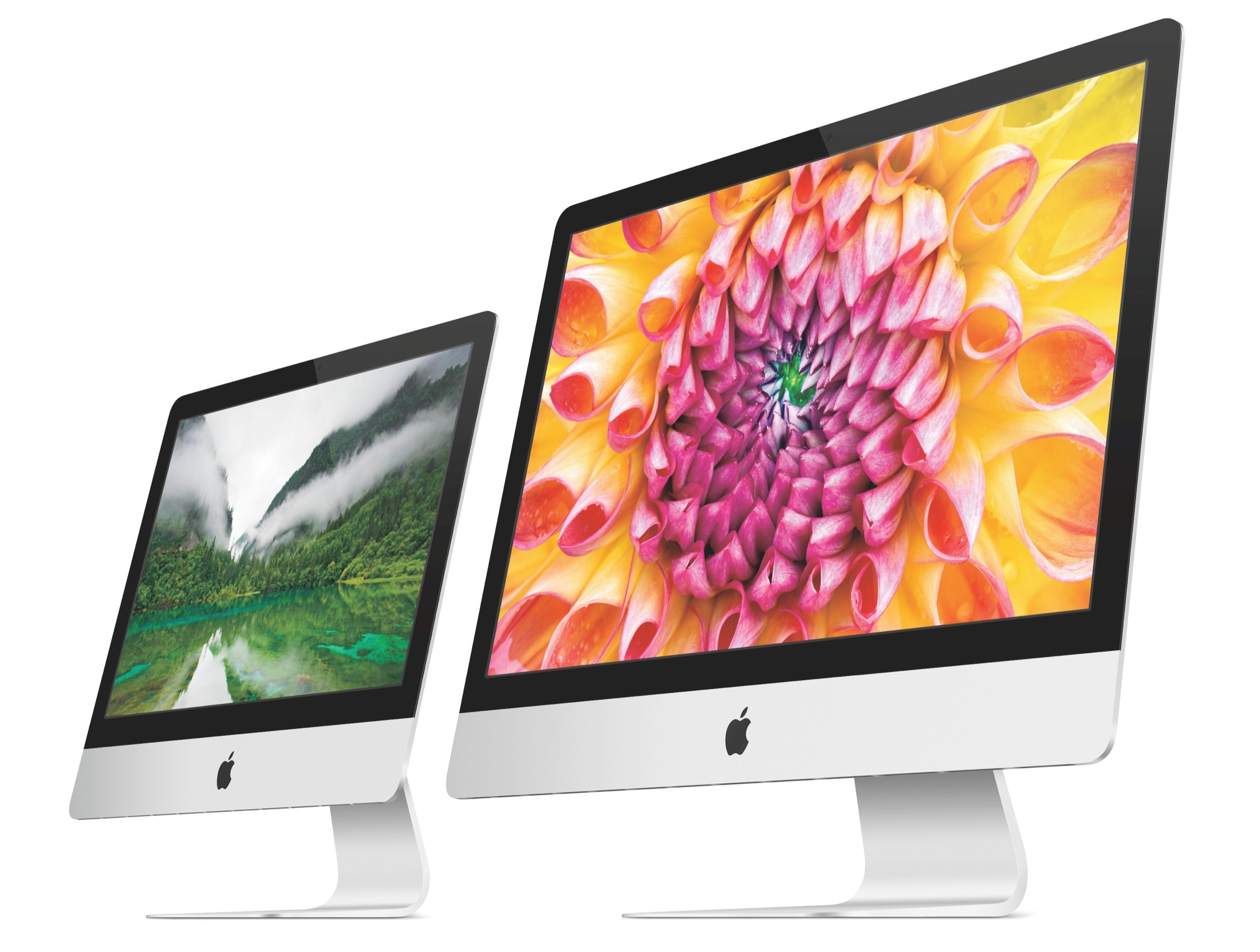
The Apple announcements to me were somewhat of a mixed bag.
I love the new iMac design, with the exception of the omitted optical media. A computer that slim with such a great display deserves to be usable as a media center. Otherwise it’s actually a great computer at a good price. If you think about it, not only do you get a pretty good computer, you get a great display in an amazing setup. It looks great.
Retina displays on the 15″ MacBook Pro are awesome, however it seems many find the fonts especially to be too small and end up lowering the resolution to make things easier on the eyes and thus defeating the advantage of that great display. I’m not sure that a 13″ MacBook Pro is going to do much better in that regard. The other gripe I have with it over, aside for the lack of optical media which I still find useful is only having Intel HD Graphics 4000 and no discrete graphics. While the Intel graphics aren’t terrible, they aren’t amazing either. Given the number of pixels on that screen, and that price tag, I’d like something a little more powerful driving it.
The iPad Mini is slightly more expensive than most people thought it would be. It’s however a rather good looking device with some great specs for the price. I think for the slightly higher premium you get a much better product and ecosystem than you do with the competition. Well worth spending just a little more. The only thing I’m not quite sure of is how it would actually feel. The iPad’s size is really part of it’s charm. It doesn’t feel like a phone, it feels like a substantial device. Yet another reason why I’ll need to take a trip to an Apple Store soon and play with one.
The iPad 4 is also quite impressive. Ars believes it’s based on the 32nm process. They also think it’s clocked at 1.5GHz and on the GPU side is still using the PowerVR SGX543 cores just clocked at 500 MHz up from 250 MHz. We don’t know for certain, but this sounds very plausible and I’m inclined to agree.
It’s becoming clear to me that despite Apple having a huge chunk of the mobile web, it still treats the web as a second class citizen on iOS and Mac OS X. My latest battle is adaptive images, in particular for use in High DPI devices (“Retina” on the Mac). High DPI displays are awesome. I own an iPad 3, and it’s one of the greatest displays I’ve ever looked at. What I don’t get is why Apple is making it so difficult to take advantage of as a developer.
Currently, there’s no easy way to switch image resolutions based on the display being used. The basis of that isn’t Apple’s fault. Nobody thought of the problem when HTML was first created. All of the methods have ugly tradeoffs. They are hacks. Even Apple.com doesn’t have a great solution. They were doing image replacement (easier to read version here). Apple does however have a solution called image-set which looks like it will be in iOS 6 and Mac OS X 10.8.
That’s several months later. The iPad 3 was announced March 7, which was only about 2 weeks after the initial proposal. Why wasn’t a solution for web authors included when the iPad 3 shipped? It seems silly that there’s no API to properly interface with one of the most touted features of the new device. Of course there’s a way to take advantage of that brilliant display if you build a native app.
You could argue that Apple didn’t want to rush implementing something proprietary without discussing it with the community at large, but Apple has said in the past:
tantek (Mozilla): I think if you’re working on open standards, you should propose your features before you implement them and discuss that here.
smfr (Apple): We can’t do that.
sylvaing (Microsoft): We can’t do that either.
So Apple is pretty candid about reserving the right to implement features without discussion, yet nothing happened. It’s not that such a discussion would have been a “leak”. The iPhone 4’s display would be adequate justification for the feature. In fact it’s mentioned in the first sentence of that proposal in www-style by Edward O’Connor. So not disclosing the new product doesn’t seem to be the reason either. Apple could have done this a year ago without anyone being any wiser about the iPad 3’s display.
I can’t be the only one who’s scratching his head over this. Why didn’t the iPad 3 ship with a browser capable of providing an efficient way to switch images? The cynic in me would say “to encourage native app development”, but then why bother now?
The upside is Apple products have high OS adoption rates. All those retina iPad 3’s will be running iOS 6 relatively quickly. If it were a popular Android device I’d be much more concerned because we’d be dealing with 2 years of devices on a stale OS with no support. This is why we need more competition in mobile. We need web solutions to be a priority, not an afterthought.
As far as I’m aware image-set is also prefixed, but that’s another rant.


It dawned on me today while watching “Star Wars Episode I: The Phantom Menace” that George Lucas actually featured a surprisingly iPad like device. It was used by Shmi Skywalker, Anakin’s mother (left) and Queen Amidala (right) to watch the podrace which occurred over a larger terrain than spectators could see. It was wireless, thin, and roughly the same form factor, but with handles. In theory if licensing weren’t so complicated we could watch sports like that today at stadiums.
Interesting to note that even in a world where interplanetary travel is almost trivial, a tablet computer is thicker than the iPads we have today. Then again the timeline was “a long time ago”. What an amazing world we live in when you can beat George Lucas’s imagination in a mere 15 years.
Capture © 20th Century Fox
Apple’s iPad 3 video starts off with what I think should be the guiding principle behind all user experience:
We believe technology is at its very best when it’s invisible. When you’re conscious only of what you’re doing, not the device you’re doing it with…
Apple is still a hardware company and selling iPads, so they used the word “device”, but it’s safe to change this to “technology” and not loose anything. Go ahead, read that sentence again before continuing.
That principle is the reason the iPad is dominating the tablet market. That principle is the reason the iPhone sells so well despite its high price tag (in a bad economy no less) and being so locked down. If it wasn’t for that philosophy Apple would be in trouble. That principle is the explanation for everything that technology implementors just don’t get about Apple. Same goes for Facebook and even Google (to a degree). That principle is everything in consumer technology.
This is why I disagree with the “learn to code” mantra of 2012. It’s well-intentioned, but it shouldn’t be necessary. It violates this golden principle. It completely flips this principle upside down. It makes only the technology visible and abstracts what you’re actually trying to accomplish. It’s the complete opposite of what users want and expect from technology. That is why programming never became mainstream. That’s why repairing your own car or home appliances isn’t mainstream. When you make the technology the focus, you loose.
We won’t have flying cars until the necessary technology is simplified to the point where it’s as simple as steering in the direction you want to go and some basic driving flying rules (which are etiquette more than technology limitations). You don’t expect people to understand lift coefficient (CL) or Angle Of Attack (AOA) to go grocery shipping. That’s why we have pilots and people drive cars. I expect a pilot to understand these concepts and avoid a stall. When it’s Jetsons simple, we’ll have flying cars.
Want to enable creation? Abstract the technology to the point where the user only focuses on content creation. There’s a reason why email didn’t take off until AOL made a pretty easy to use client (by 90’s standards). There’s a reason photo sharing didn’t takeoff when you could just email them to someone. There’s a reason why people aren’t creating content outside walled gardens. People only care about the activity and the goals they have in mind, not the technology that makes it possible.
The last major innovation in web content creation outside a walled garden was the WYSIWYG editor. Look around, few still exist. The ones that do are focused on FTP of static pages to a web server. Not one that I’m aware of would let a user generate for example a WordPress or Drupal theme without touching code. Purely WYSIWYG. It’s 2012 and it’s not possible to create a blog theme without merging markup and some server side code (PHP in this example). As a reference point support for a handful of CMS’s would cover a huge chunk of the web not owned by large companies. You shouldn’t need to understand CSS selectors to set a background color and you shouldn’t need to know #000 (or #000000) is “black” (which can also be used).
The suggestion that users are in the wrong for not being willing or able to learn is invalid. They shouldn’t need to.
Enabling content creation needs to be done the same way enabling content consumption is done: by making it so the technology is invisible and task at hand is the sole focus. Why should creating a spreadsheet with my finances be less technically complicated than publishing a paragraph of text on the web?
We’ve failed if the only way to participate on the web is to fully understand the technology. Walled gardens have manage to abstract it fairly well. Surely there’s a better way1.
1. I’ve got more thoughts on that, but I’ll save it for another day/blog post.

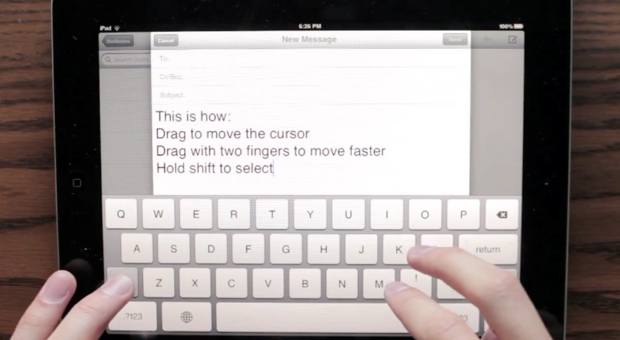
Here’s a great little prototype keyboard someone is proposing for the iPad. I’d love to see this in a future iOS release. The only thing it doesn’t address is the complex problem of autocorrect, which it strangely points out early on. Even still, it’s a great improvement to text selection. Apple should hire the person behind this for some UX work.

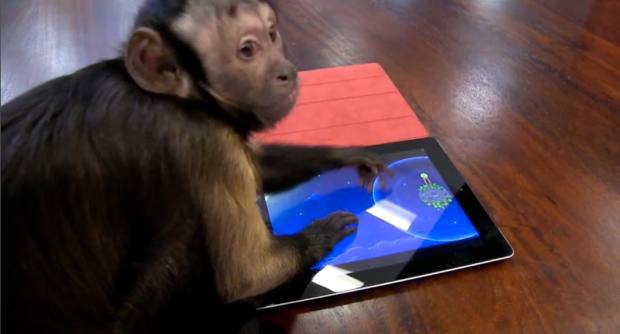
Because it’s Friday and I like Monkeys.
Dustin Sklavos at AnandTech pinpointed my feelings in regard to crappy displays:
Each time I write about a notebook with a crappy display, more and more people get irate in comments, and many of you simply write off the review. The unfortunate fact of the matter is that hardware like this is still what’s prevalent in the marketplace, and that Joe Consumer either doesn’t seem to care that much about screen quality or just doesn’t know to ask for better. That tide may change with the rise of tablets, but there are people who see text on a high resolution screen, see that it’s “too small,” and just assume the screen quality is poor. So this problem persists.
I don’t understand how people can stand poor quality screen as this point. I may be a little extreme in my nitpicking, I think the glossy MacBook Pro displays are borderline unusable due to glare and over-saturation. But I think we can all agree that the typical lower end PC laptop is trash. For what it’s worth I’m staring into a Dell display that I really like right now, so this isn’t PC-bashing.
The iPad’s retina display is stunning. It’s the best display I’ve ever seen other than my iPhone. I can’t wait until that’s eventually available in a larger desktop size, and at a price we can all afford.
[Hat Tip: Jeff Atwood]

 The most interesting thing in the iFixIt iPad 3 teardown is the discovery of the new BCM4330 chip. This chip is specifically a: 802.11a/b/g/n MAC/Baseband/Radio with Integrated Bluetooth 4.0+HS & FM Transceiver. That’s a mouthful.
Apple likes to keep things in sync. It’s a reasonable bet this is part of the next-gen platform for the iPhone. It’s assumed the next iPhone will have a similar if not identical LTE chipset as the new iPad. This gives a little hint of what might be to come. 802.11/a/b/g/n is a given. Same with Bluetooth 4.0+HS. A FM Transceiver on board is a new one.
This is a pretty interesting find. Specifically it receives and transmits FM. I’m guessing this is part of the next iPhone platform. No feature on the iPad so far supports this. While it’s possible Apple will never use it, I suspect they will. The iPod nano already has an FM receiver. This would be a feature parody against an entry-level product. Carriers will obviously love the idea of users getting music in a method that doesn’t need data connectivity (just like they favor WiFi). You’re locked into a data plan for 2 years anyway.
Even more interesting is the transmit ability. This could be the basis of a built-in iTrip car adapter in every iPhone. Just press a button and set your radio to the corresponding FM station. One less adapter, one less thing to fuss around with. Your iOS device now connects to any audio device with an FM receiver. Sure the quality won’t be perfect, but it’s a huge step towards your iOS device being your media solution everywhere.
This is of course a theory, but I think it’s at least plausible.

Conan on the new iPad Display. Amusing as always. Ironically the video Team Coco posted isn’t terribly great quality.